


Our Approach to Scheduling & Frequency of Care
How Scheduling Supports Patient Care
When we think about scheduling, our focus is on developing a model that serves the needs of our patient, allows our team to have clinical discretion, and ensure patient access to care.
Our clinicians:
- Align with each patient’s needs
- Set clear expectations and objectives for patients
- Ensure patients make progress and understand the importance of POC adherence
- Support continuity of care beyond the clinic
How Our Scheduling Gives You Autonomy
As we evaluated scheduling models, we aimed to use an approach with proven clinical outcomes while still giving clinicians the flexibility to make decisions based on each patient’s unique needs.
At Bay State Physical Therapy, our clinicians use a scheduling model designed to provide flexibility while supporting high-quality care. By utilizing 60-minute evaluations, with 30-minute follow-up blocks blocks with dovetailing, we have the flexibility to treat each patient as an individual.
Many scheduling models in physical therapy rely on fixed visit lengths , which can limit flexibility in how care is delivered. At Bay State Physical Therapy, scheduling decisions are based on a single question: what does the patient need at this point in their care. Our scheduling model uses 60-minute evaluations and follow-up visits scheduled every 30 minutes with dovetailing.
Our scheduling model is structured to:
- Allow physical therapists to adjust each patient’s visit length based on the patient’s complexity
- Support clinical decision-making at each stage of care
- Align scheduling with each patient’s treatment goals and expected progression
But our decision to schedule this way was based on more than a concept, we tested multiple approaches and measured the results:
- We ran an 18-month pilot to compare our 60-minute evaluation model and 30-minute flexible follow-up model with 45-minutes of one-on-one fixed time blocks.
- The dovetailing 30-minutes model outperformed the 45-minutes one-on-one model on all outcome measures and in patient experience (91 versus 94).
- After converting the pilot group to our normal scheduling model, outcomes improved 13% and experience scores increased by two points.
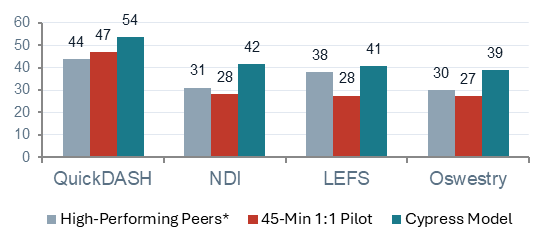
See below for how our model compares to others:
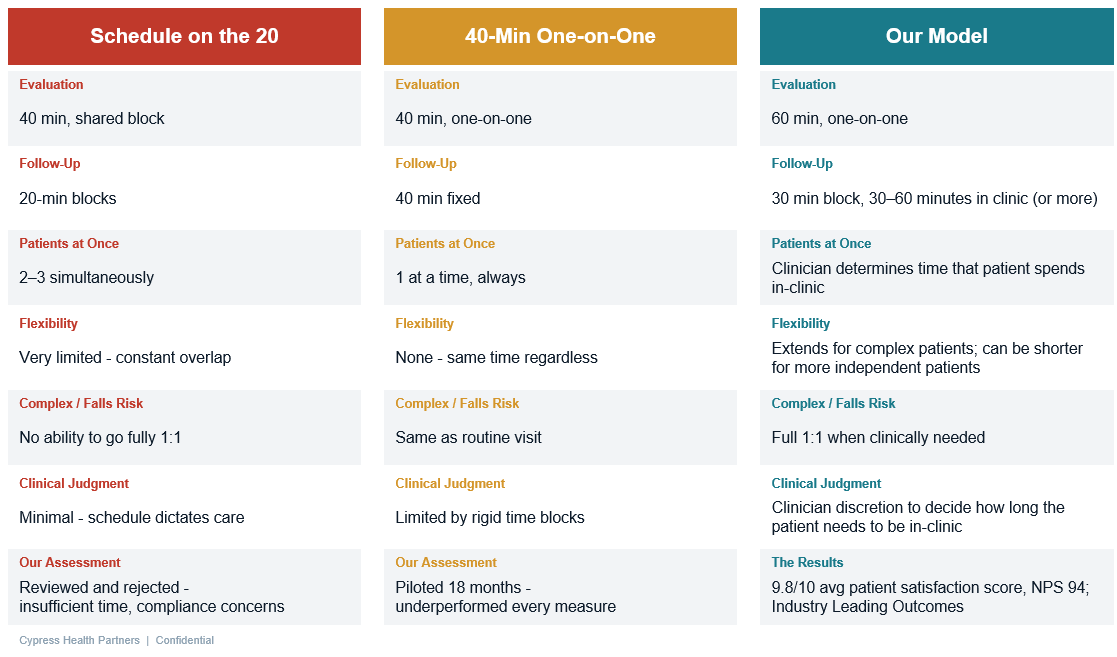
Why We Use This Scheduling Model
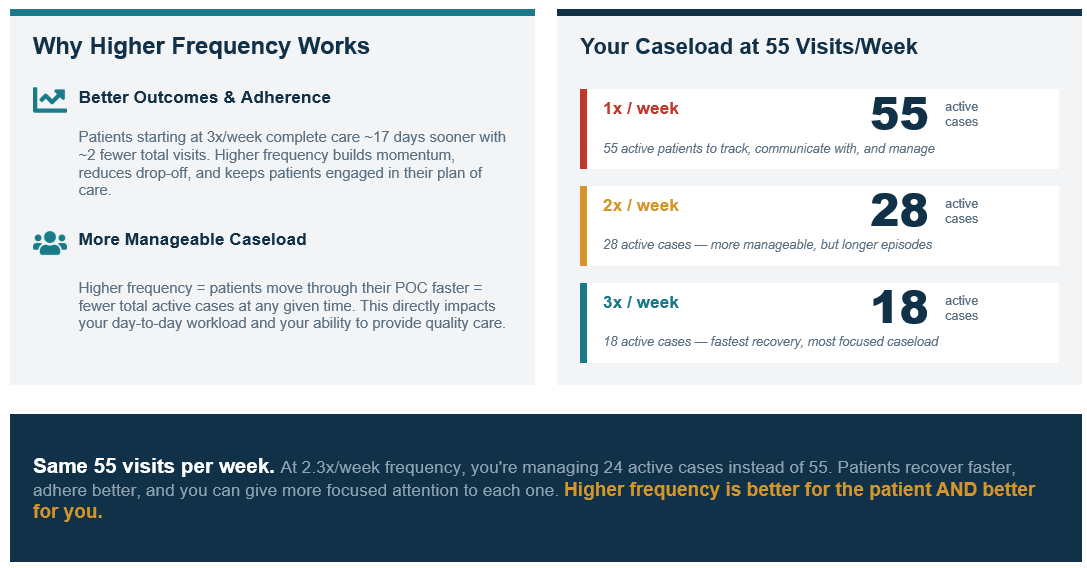
Our approach to determining scheduling frequency is based on the evidence. While all decision making is patient specific, our data consistently shows that higher frequency of care at the onset leads to better plan of care adherence, improved outcomes, and a smaller overall number of visits.
We also see meaningful benefits for our team. Low frequency care not only extends duration, but it can also make caseload managing much more challenging for clinicians. We want to ensure you feel connected to your patients, and the size of your active caseload is an important component.
What matters most is how our care philosophy impacts our patients’ care along with their outcomes.
Learn more about our approach to delivering high-quality care:


Ready to apply this approach in your own career?